Have you ever been in a planning meeting where a manager asks,
“How many user stories are we committing to this sprint?”
…and the room goes completely silent?
Or maybe planning just ended and a stakeholder casually asks,
“What if we do this epic instead?”
— even though that epic was never estimated.
Or perhaps you’re an individual contributor, sitting through a long discussion about why the team can or cannot commit to something. Implementation details start surfacing. The meeting drags on. It gets harder to follow. Someone eventually asks, “What do you think?” You nod, agree, and move on — only to ask the lead or architect again later when implementation actually begins.
That pattern was far too familiar to me. After experiencing it repeatedly, I eventually got fed up.
That frustration is what led me to build both the Story Point Calculator and the Capacity Planner.
Background: From Lead QA to Engineering Manager
Earlier in my career, when I was a Lead QA Automation Engineer, I was always interested in improving team processes. I regularly suggested changes to make things clearer, more efficient, or simply more sensible. After becoming the team’s unofficial “process busybody,” I was promoted to Engineering Manager for the same team.
At the time, our QA function consisted of just me and one Senior QA. I had to operate simultaneously as a Lead QA and an Engineering Manager while advocating for more headcount. One thing I did not anticipate was this: when you’re promoted to a manager role, there is usually no onboarding.
So I did what many first-timers do. I self-studied Agile practices, Scrum, project management, and team planning. Through that learning (and through experience across multiple teams over my 11 years in tech), two things stood out as make-or-break factors for teams: Estimation and Planning.
Estimation: The fuzzy edges of the system.
Every team estimates differently.
Some estimate in hours.
Some in story points.
Some don’t estimate at all and simply say, “Yes, we’ll finish by the deadline.”
Even refinement sessions vary wildly:
- Some teams dive deep into implementation details before estimating.
- Others read only the title and give a number.
- Some rely heavily on planning poker and gut feel.
- In some cases, managers assign estimates on behalf of the team.
Planning: Where Estimation Debt Shows Up
Planning meetings often reveal the cost of weak estimation.
- Plan items that were fully estimated during refinement, or
- Pull in completely different items that were never discussed
Most of the time, it’s a mix of both. That leads to re-running refinement discussions during planning, extending meetings, and shifting the conversation toward implementation details.
What’s often missing from these conversations? Capacity planning.
Despite long discussions, teams still have to commit to something — often without a clear understanding of how days off, availability, or risk affect delivery.
How the Story Point Calculator Came to Life
Estimating a work item is about more than just thinking about “complexity.”
In practice, teams implicitly consider factors like:
- Requirements clarity
- Dependencies
- Learning curve
- Volume of work
- Technical complexity
- Risk and uncertainty
The problem is that these factors aren’t always discussed explicitly or consistently. This is why planning poker never fully worked for me. I frequently found myself asking the team why one engineer gave an 8 while another gave a 5. And while the discussion was useful, it often happened after the estimate instead of guiding it.
I wanted a way to intentionally surface these factors every time.
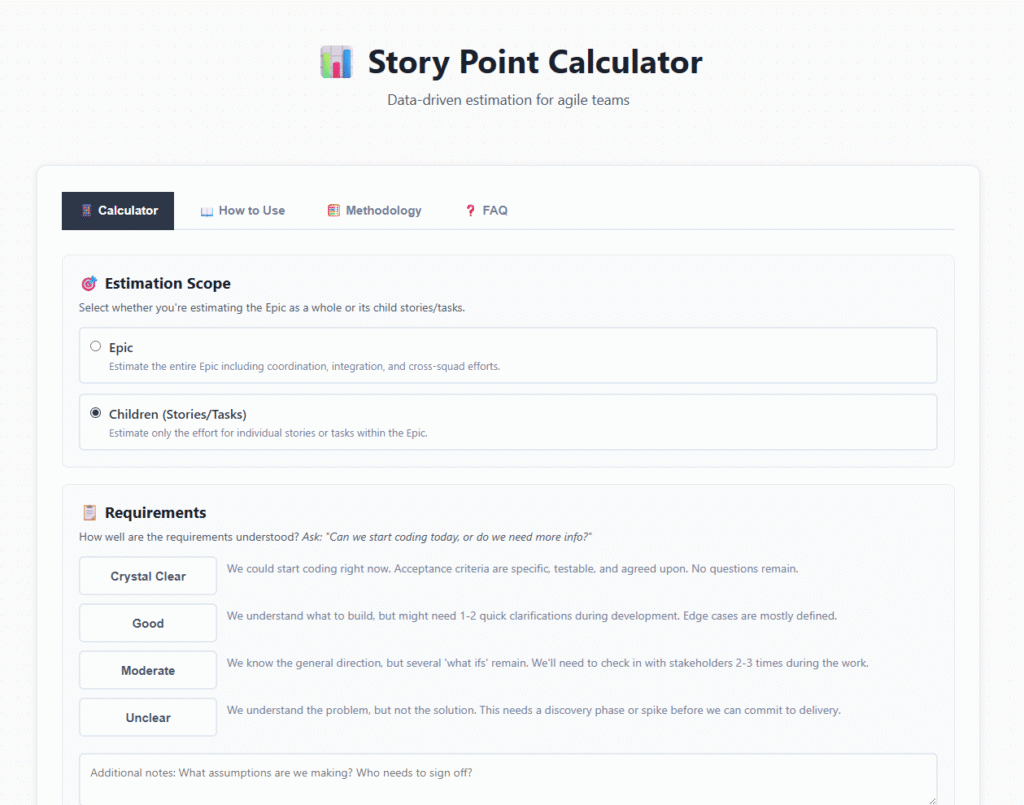
While researching, I came across Easy Retro’s Story Point Calculator. It was a great concept, and I immediately tried it with my team. However, the suggested story points didn’t align well with how the team normally estimated. That pushed me to build my own version — with clearer guidance, more explicit criteria, and additional flexibility.
And with a bit of iteration (and a dash of fun), the Story Point Calculator was born.
How the Capacity Planner Started (Accidentally)
The Capacity Planner actually came before the Story Point Calculator and back then it was only a single spreadsheet.
In June 2025, while reviewing Excel files at my previous company, I noticed a Copilot icon in the spreadsheet. I experimented with it and quickly found myself generating tables, formulas, and references with minimal effort. And then, capacity planner spreadsheet came to life.
It wasn’t that hard to explain the process to my team since they don’t have a choice anyway (just kidding. they have a choice…to listen…still kidding). Anyway, here’s what the old spreadsheet looked like:

The tool had one clear purpose:
to show how days off impact sprint velocity.
That visibility alone made planning conversations more grounded.
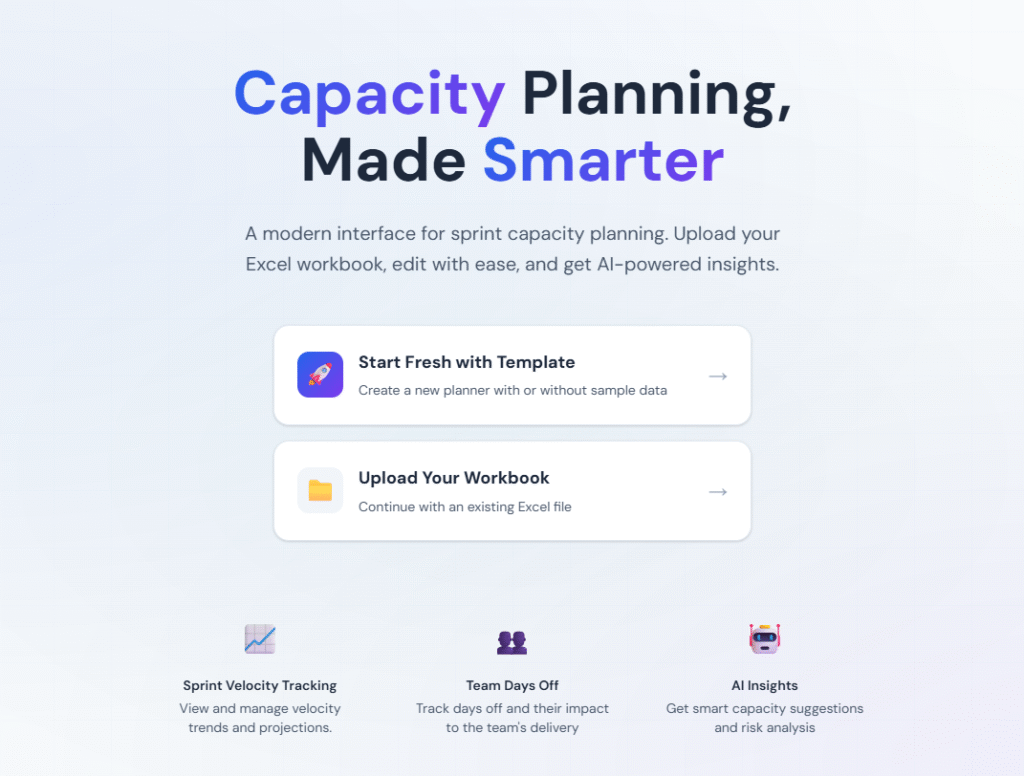
Today, that spreadsheet has evolved into Capacity Planner with AI Insights.
Let’s answer the questions at the beginning of this blog
Question 1: How many stories are we commiting to this sprint?
Using the Capacity Planner and assuming that the team has estimated everything under their current sprint, the team can go to the Sprint page and check the suggested story points:
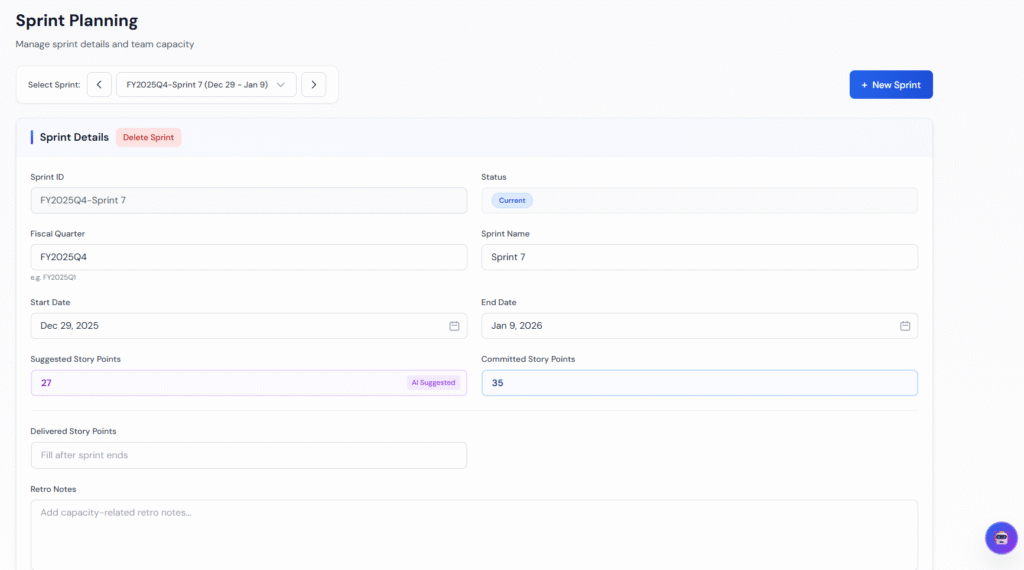
Now it’s just a matter of whether the team feels confident that they can finish more than suggested.
Question 2: “What if we do this epic instead?”
All those wasted hours estimating the other epic only to end up being asked to implement a different one. I’ve experience this exact situation before and my eyebrows almost fell from all the twitching my eye was doing. But you don’t have to worry about that anymore because the Story Point Calculator can help with that.
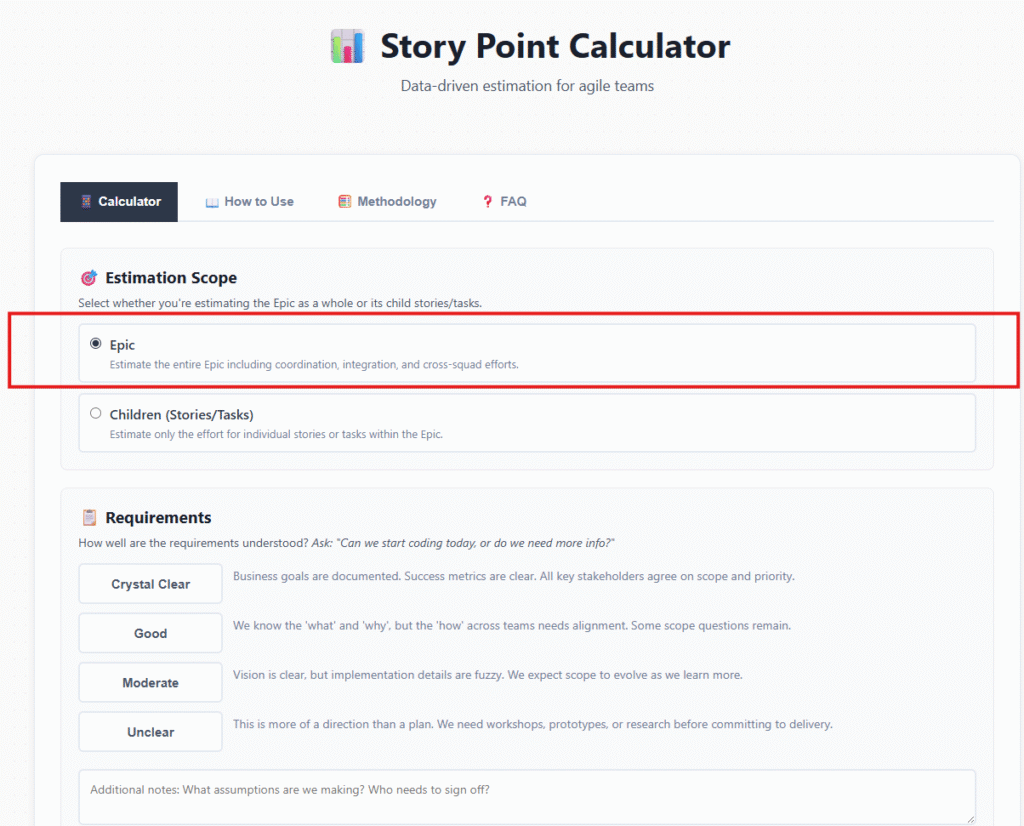
As you can see above, there’s an option to estimate an epic and this will give the team a rough estimate.
Once they have estimated the epic, they can cross check with the Velocity Projection feature of the Capacity Planner with AI Insights:
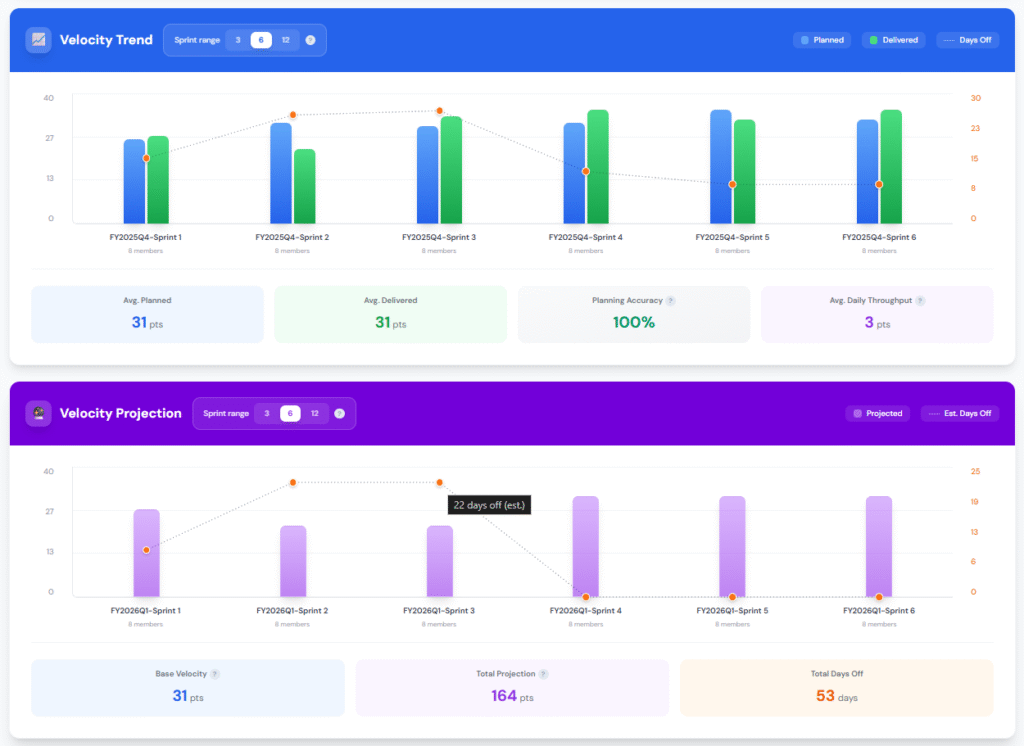
As you can see above, the Velocity Projection chart can show you the projected velocity that the team can achieve based on the team’s Base Velocity and number of days off.
With this, you can tell the stakeholder which items can fit. This is especially useful if everything is a high priority.
Takeaway
Used together, the Story Point Calculator and Capacity Planner bring structure and intention to two areas that often rely on gut feel and optimism.
They don’t eliminate judgment — but they anchor conversations around shared signals, helping teams make clearer, more defensible planning decisions.
I’ll be creating a more in-depth video walkthrough of both tools soon. In the meantime, feel free to try them out and let me know what works and what doesn’t.
Here are the links in case you missed them:
Story Point Calculator: https://story-calculator.kendoce.com
Capacity Planner with AI Insights: https://capacity-planner.kendoce.com
Got any planning or estimation woes worth sharing?